Physical Address
304 North Cardinal St.
Dorchester Center, MA 02124
Physical Address
304 North Cardinal St.
Dorchester Center, MA 02124

A Digital Single-Lens Reflex (DSLR) camera represents a significant evolution in photography technology, providing users with a versatile and powerful tool for capturing images. Central to its design is the mirror mechanism, which reflects light from the camera's lens up into an optical viewfinder, allowing for precise framing and composition. This mirror flips up when the shutter button is pressed, enabling light to reach the digital imaging sensor and capture the photograph.
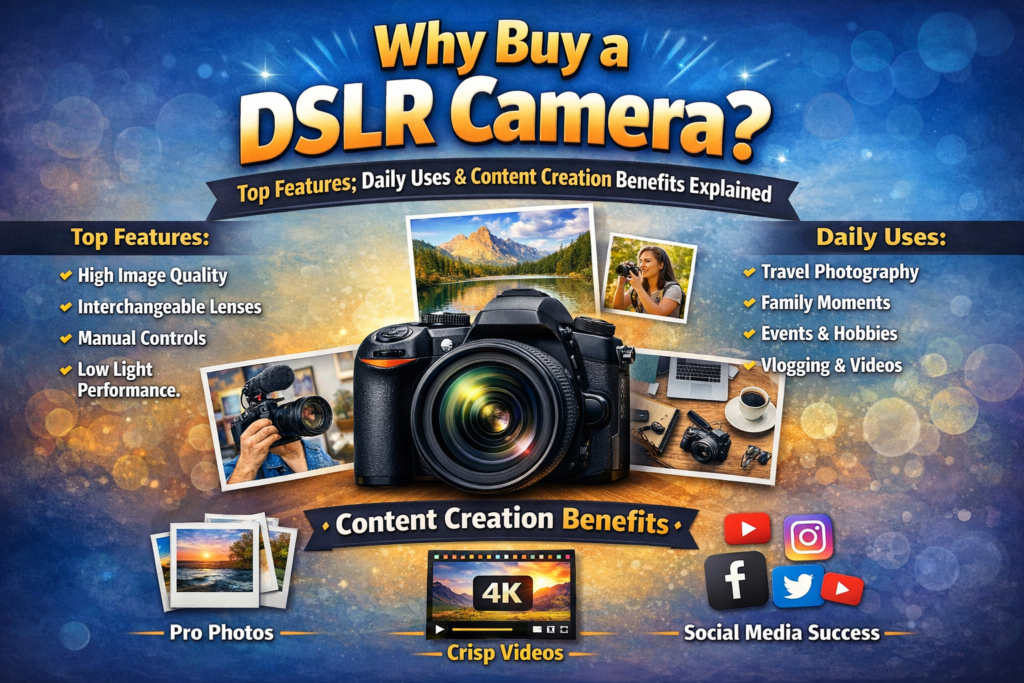
Why Buy a DSLR: A Digital Single-Lens Reflex (DSLR) camera represents a significant evolution in photography technology, providing users with a versatile and powerful tool for capturing images. Central to its design is the mirror mechanism, which reflects light from the camera’s lens up into an optical viewfinder, allowing for precise framing and composition. This mirror flips up when the shutter button is pressed, enabling light to reach the digital imaging sensor and capture the photograph.
At its core, a DSLR camera consists of several essential components, including the lens, mirror assembly, optical viewfinder, and sensor. The digital imaging sensor is critical for determining image quality; it captures light and converts it into digital information, resulting in high-resolution photographs. The versatility in lens selection further sets DSLR cameras apart. Users can choose different lenses, each tailored for specific shooting conditions, such as macro, wide-angle, or telephoto photography.


When comparing DSLRs to other camera types, such as mirrorless models or point-and-shoot cameras, the advantages of using a DSLR become evident. While mirrorless cameras are generally more compact and lightweight, they do not offer the same optical viewfinder experience, which many photographers prefer for its real-time view of the scene. Point-and-shoot cameras, on the other hand, are easy to use but often lack the advanced features and customization available in DSLR systems. Thus, those seeking serious photography, especially content creation, often find themselves gravitating towards DSLRs due to their superior image quality and depth of control.
This distinction reinforces the question of why buy a DSLR, particularly for beginners looking to enhance their photographic skills, as these cameras provide the tools needed to grow and learn in the field of photography.
Digital Single-Lens Reflex (DSLR) cameras are renowned for their superior image quality, making them a preferred choice for both amateur photographers and seasoned professionals. The primary feature that sets DSLR cameras apart is the large sensor size, which significantly contributes to capturing high-resolution images with intricate details. This quality is essential for photographers focused on creating stunning visuals, particularly for those pursuing content creation in various formats.
Another significant benefit is the control over settings that DSLRs offer. Photographers can manually adjust exposure, ISO, aperture, and shutter speed, allowing for precise control over each photograph. This level of customization is crucial for beginners learning the fundamentals of photography, as well as for experienced photographers who wish to achieve specific artistic effects. Unlike smartphone cameras that often use automated settings, a DSLR provides a tactile experience that helps users understand the technical aspects of photography.




Interchangeable lenses are another key feature of DSLR cameras, allowing users to select the most appropriate lens for their shooting scenario. Whether capturing landscapes, portraits, or macro photography, the ability to switch lenses grants versatility that smartphones cannot match. Additionally, DSLRs excel in low-light conditions due to their larger sensors, which can capture more light and reduce noise effectively. This performance is particularly beneficial for indoor photography or night scenes.
The manual controls and customizable features of DSLR cameras make them an attractive option for those considering the best DSLR for beginners. This camera type not only supports creativity but also encourages growth in the craft of photography. Ultimately, these compelling features highlight the reasons why one might choose to invest in a DSLR camera over other options, such as smartphones, particularly for dedicated photography enthusiasts.
DSLR cameras are renowned for their exceptional quality and versatility, making them a preferred choice for various daily photography needs. One of the most common uses includes capturing personal memories during vacations and family gatherings. Unlike smartphone cameras, which may lack in sensor size and lens quality, the advanced dslr camera features enable users to take stunning photos with rich details and vibrant colors, especially in low-light conditions.
Another significant area where DSLRs excel is in the realm of special events such as weddings and parties. Capturing the emotional nuances during these occasions requires a camera that can adapt quickly to changing environments. The capability of a DSLR to change lenses ensures that photographers can be prepared for any scenario, from wide-angle shots of large groups to close-up portraits amidst the festivities.
| Feature | DSLR Camera | Smartphone |
| Image Quality | Superior (large sensor) | Good, but limited |
| Lens Options | Interchangeable | Fixed |
| Manual Control | Full | Limited |
| Low-Light Performance | Excellent | Average |
| Content Creation | Professional | Casual |
Furthermore, professional applications highlight the superiority of DSLRs over other devices. They are extensively used in portrait photography where precise control over depth of field and background blur can lead to stunning results. Real estate photography also benefits from the high resolution and dynamic range that DSLRs offer, allowing for crisper images that showcase properties effectively.
Wildlife photography presents another opportunity where the robustness and responsiveness of a DSLR camera can make a huge difference. With fast autofocus and quick shutter speeds, photographers can capture fleeting moments in nature that smartphones simply cannot match.
In terms of content creation, many vloggers and YouTubers are gravitating towards the best DSLR for beginners, seeking quality videography and high-resolution stills. The distinct advantage of interchangeable lenses and various shooting modes positions DSLRs as superior tools for those pursuing both creative and professional photography projects.
When considering the investment in a DSLR camera, it is essential to evaluate several personal factors that can influence your choice. One of the primary aspects to assess is your budget. DSLR cameras can range from entry-level models to more advanced options, which may be accompanied by varying costs. Determine what you are willing to spend not only on the camera body but also on lenses, accessories, and potential upgrades over time.
Your photography goals should also greatly influence your decision. Are you a beginner looking to capture family events, or are you an aspiring content creator aiming for professional quality? If you find yourself leaning towards more than casual photography, investing in a DSLR with robust features can make a significant difference in achieving high-quality results. The best DSLR for beginners may have user-friendly interfaces and practical features, while more advanced models could offer advanced shooting modes and superior image quality.
Another crucial comparison to consider is the ongoing debate of DSLR vs smartphone photography. While smartphones have made significant advancements, enabling impressive photographic capabilities, they may still fall short in creative control and image quality. A DSLR offers extensive settings, interchangeable lenses, and superior performance in varied lighting conditions, making it a strong candidate for serious photographer commitments.
Furthermore, consider the importance of advanced features such as manual controls, interchangeable lenses, and optical viewfinders—elements that can enhance your shooting experience. As you reflect on these aspects, try to align them with your overall desire and readiness to engage in photography at different levels. In conclusion, carefully weighing your budget, goals, and the distinctive advantages of DSLRs over other devices can lead you to make an informed decision regarding whether to buy a DSLR camera.